Baladi Guide
Grass-fed vs Grain-fed, who is better?
A complete comparison between grass-fed and grain-fed beef: what the terms really mean, what it does to the meat, how to cook it correctly, and why it costs more.
מאת: Baladi Editorial Team
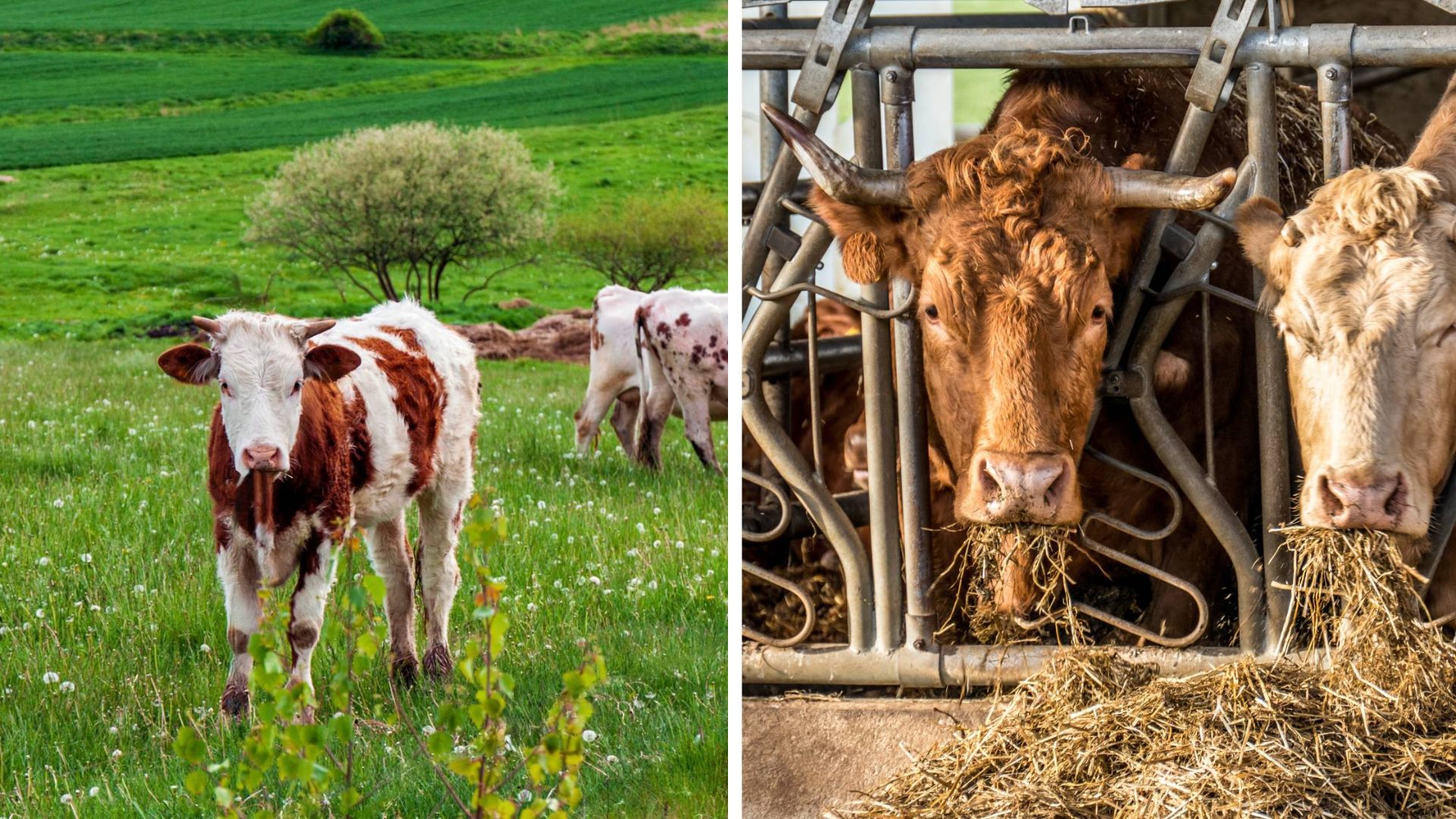
In recent years, more and more consumers are starting to pay attention to what is hidden behind the names on the meat packaging. Not just "what cut?", but "how did the beef grow?". Within this discussion, the two most prominent breeding methods are Grass-fed and Grain-fed - or in simple words: cattle raised on grass versus cattle fed a grain mixture.
Apparently, this is only a technical difference: both methods produce meat, both products look similar on the shelf, and both types of beef end up on the plate. But in practice - the difference is much deeper. It affects the taste, the texture, the nutritional values, the welfare of the animals and the way we as consumers feel about our choice.
Three words you should not confuse
grass-fed (Grass-fed): Cattle raised on pasture and fed on grass. In many places in the world, the term does not exclude the addition of grain fattening in recent months.
100% grass-fed: Grass only, from weaning to the end, without a fattening phase at all. This is the difference between a breeding method and a label.
Organic: A separate standard that mainly defines what is prohibited - no growth hormones and no antibiotics as usual, with grazing requirements and monitoring of cattle welfare.
The two terms are not synonymous. Beef can be 100% grass-fed and non-organic, if the pasture grass is not organic or if antibiotics and growth hormones are used on the farm. And vice versa: beef can be organic and still be fattened - simply on organic grains. In other words, grass-fed answers the question of what goes into the animal. Organic answers the question of what not.
What is Grass-fed?
Beef is a ruminant. His digestive system—four stomach cells and an entire population of bacteria living inside them—evolved around one thing: grass. Grazing cattle live exactly like this: move in the field, graze throughout the day, belong to the herd. There is nothing innovative about it and there is nothing trendy about it. It's just what cattle do when given. This is not an ideology; This is the most original model of cattle breeding.
What is Grain-fed?
Grain-fed cattle also begin their lives in pasture, but end them in the fattening stage: they move to an enclosed enclosure and receive a concentrated and high-energy diet, based mostly on grains. The goal is clear - to gain weight quickly and produce uniform and marbled meat. It's a very efficient system, but efficiency and quality are not the same thing. A diet rich in grains fundamentally changes the environment of the animal's digestive system, sometimes to the point of digestive and metabolic disorders. It is designed to optimize the breeding process, not to imitate what the animal was built to eat.
Precisely the last months are the ones that leave the biggest mark on the composition of the fat and the taste - therefore the distinction between "grass-fed" and "100% grass-fed" is not semantic.
What happens inside the slice
Studies conducted over the years indicate a consistent trend: compared to grain-fed meat, pastured meat tends to contain more omega-3 fatty acids, a more balanced ratio between omega-3 and omega-6, and sometimes also higher levels of CLA and antioxidants such as vitamin E and beta-carotene. The exact numbers vary between races, regions and seasons, but the trend repeats itself over and over.
There is no medical guarantee here. There is a simple principle here: what the animal eats changes the meat we eat.
The difference in taste and texture
The difference is also noticeable in the taste: meat from grain fattening is fatty, soft and uniform - the taste profile most of us grew up with. Pastured meat is leaner, with less internal fat, and its flavor is distinct, deep, sometimes herbaceous or mineral. For some consumers the uniform taste is preferred; Those looking for a natural taste will find in pastured meat a return to the source.
Meat that asks for time
An animal that moves in the field throughout its life develops different muscle and connective tissue than an animal that stands in a pen. The meat that comes out of it is structured differently: less internal fat, more texture, more character. And this is exactly the kind of meat that long and slow cooking knows how to break through: hours of low heat dissolve the connective tissue into gelatin, and the cut becomes soft and deep in a way that a quick sear will never achieve.
The default is a pot or oven, not a pan. Most cuts are built for long, slow cooking. A heavy pot on a low flame works great, and an oven is even better: 140-150 degrees, closed vessel, three to five hours of enveloping heat.
For searing, choose a cut intended for this. Minut steak and minut sirloin are cut extremely thin, just to work on high heat and in a short time.
Minutes count seconds, not degrees of action. A slice this thick will not remain medium-rare even if you insist. A hot pan, a few seconds on each side, and immediately take out.
Grinds love direct fire. A hamburger comes out great on a pan, grill or barbecue; Kebabs and sausages prefer a grill or barbecue. In ground products, the thinness is actually an advantage - the percentage of fat is determined in the kitchen and not in the fattening pen.
And why is it more expensive?
Let's put it simply: organic pastured meat costs more, sometimes significantly more. It's not marketing, it's arithmetic. A grazing animal gains weight more slowly, consumes space, requires more time and more work. Organic standardization adds oversight and costs. No one will find magic here.
The real question is not how to get cheaper meat, but what you get for the difference - and if it is better to eat meat less often and choose better each time.
So who is better?
If quality means maximum utilization, grain fattening has a clear advantage. But if quality also includes the life that preceded the dissection, the food the animal ate, its freedom to move, what was not injected into its body and the nutritional composition of what ends up on the plate - the picture is reversed.
The choice, in the end, is everyone's. But the next time we stand in front of two pieces and reach for the marble between them, maybe it's worth asking one more question: what was the life like before it?
Looking for our organic products?
Where to buy